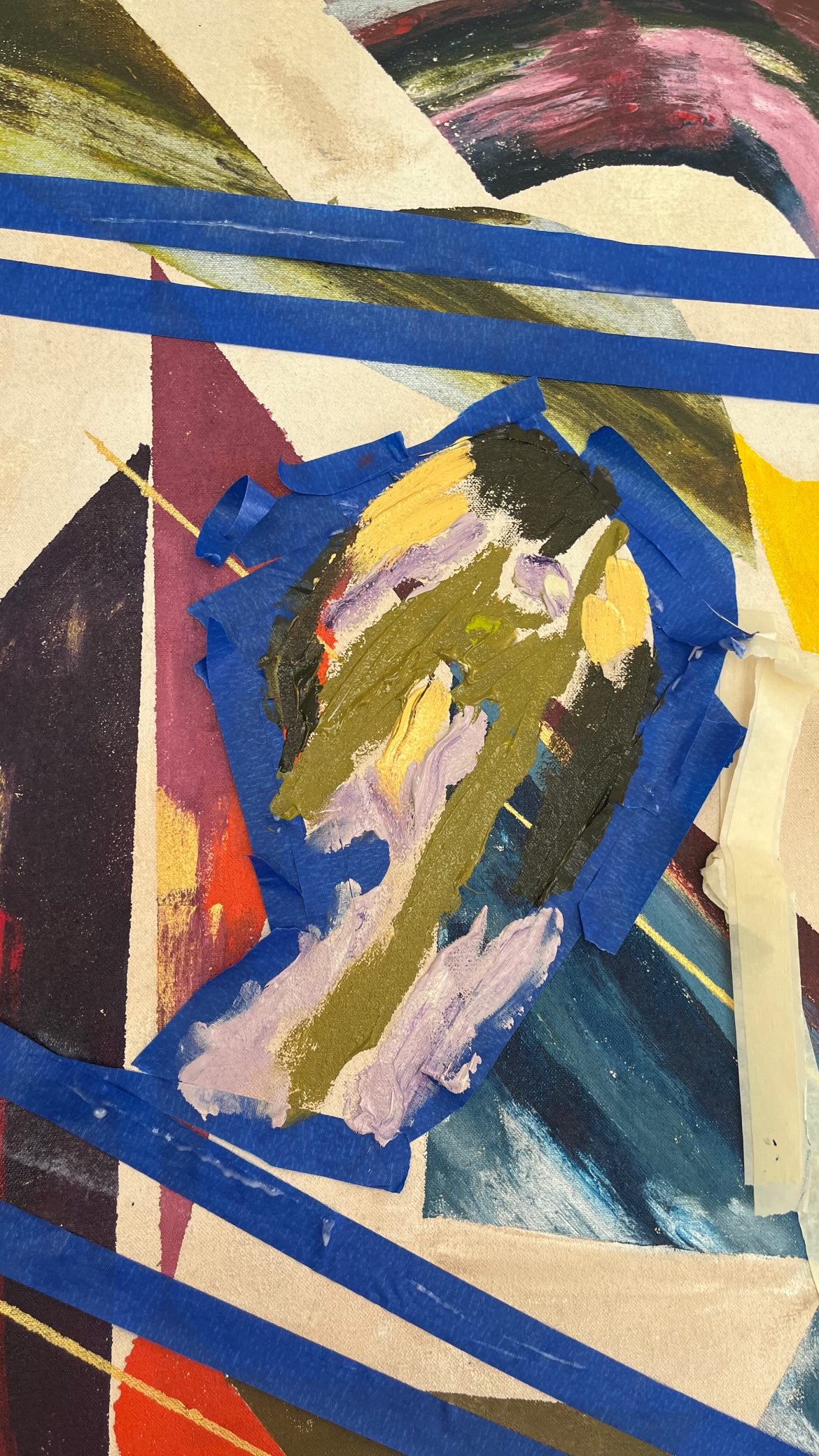
March 2020. The world shut down. Like everyone, I went home and suddenly had time I'd never had before—time that was terrifying and empty and infinite all at once.
I wasn't working toward anything specific. There was no timeline, no deadline, no audience. Just me, a studio space, and uncertainty about whether art mattered when the world was fractured.
It turns out, that uncertainty was generative.
The Initial Silence
When lockdown began, I stopped performing (I was still primarily a pianist then). The performance circuit disappeared. Concerts canceled. Venues closed. For months, I existed in a strange suspension—trained for something that became impossible.
I had a studio, though. Space and time. The pandemic gave me something artists rarely have: uninterrupted studio time with zero external pressure. No concerts to prepare for. No external deadlines. Just the work itself.
Finding Community in Digital Space
Early in the pandemic, I began posting my work online. Instagram became gallery, studio journal, and community all at once. There was something about the distance of digital platforms that made honesty possible. I could experiment, fail publicly, develop without judgment.
The Panamanian online community became my first serious audience. People responding to my work, sharing it, engaging with the process in real time. For someone isolated in studio, that digital community became essential. It proved that connection was possible even when physical gathering was forbidden.
The Creative Freedom of Constraint
Paradoxically, lockdown constraint created creative freedom. With nowhere to perform and no external markers of success, I could ask: What do I actually want to make?
Without that pressure, I began exploring visual art more seriously. Piano had been my professional identity, but visual creativity had always been present. The pandemic removed the external reason to prioritize piano and allowed me to investigate what visual expression could become.
I had time to experiment. To fail. To work through hundreds of small decisions that eventually clarified a direction. I began developing the chromatic flattening technique not because I was trying to pioneer something, but because I had the time to try approaches that didn't work and learn why they failed.
What the Pandemic Taught Me
That crisis can be generative. That constraint can create freedom. That community can exist in unexpected spaces. That art matters precisely because it's not essential—it creates space for human meaning when everything else feels broken.
The pandemic didn't make me an artist. But it clarified what I wanted my artistic practice to be. It removed the noise and revealed what mattered. And it connected me to a community of creators facing the same uncertainty and discovering similar truths.